From The American Thinker:
September 18, 2010
Did the administration play politics with UAW pensions for GM supplier?
Rick Moran
The Obama administration should take heed; they have TARP IG Neil Barofsky on their trail with regard to the question of whether political considerations were involved in giving UAW hourly workers 100% of their pensions at a GM supplier.
The Washington Post:
The story of GM's relationship with Delphi, which made powertrain, safety and other technologies, is a convoluted one. In short, GM spun off the company in 1999, and it later went bankrupt. As is usual in such situations, the federal Pension Benefit Guaranty Corp. (PBGC) eventually took over Delphi's underfunded pension funds, paying its beneficiaries pennies on the dollar. But the UAW, unlike the salaried employees, had negotiated a prior agreement under which GM agreed to "top off" members' pensions if an independent Delphi ever went bust. Honoring this commitment added $2.1 billion to the GM pension plan's deficit in the fall of 2008, a time when GM, too, was rapidly going down the tubes.
The Obama administration's auto task force decided taxpayers couldn't afford to give Delphi's white-collar workers any more than the reduced benefits to which they were legally entitled. In contrast, the task force concluded that GM's commitment to the UAW was legally binding on a taxpayer-owned post-bankruptcy GM -- just as binding as its other pension obligations, which the task force had agreed to leave untouched. This is plausible, legally. But why did the administration make pension obligations to the UAW sacrosanct in the first place?
We're talking a massive cost burden worth tens of billions of dollars. In theory, the PBGC could have taken it over, putting all UAW pensioners in the same position as Delphi's salaried retirees. To be sure, given the PBGC's precarious finances, this could have imposed a hit on taxpayers as well. But the administration might at least have pressed the UAW to reform its pensions, which are far more generous than those enjoyed by most workers.
Barofsky is fearless - something he proved when he held Treasury Department political appointees accountable for missing paperwork on how much some banks got out of TARP. Despite some threats tossed in his direction, he eventually pried the necessary documents from Treasury.
As the Post points out, the trail will be very convoluted and hard to follow. But, as most of us suspect, it is likely he will find at the end of his quest simple political backstroking by the administration in paying off UAW for support during the campaign.
Hat Tip: Ed Lasky
Posted at 11:12 AM
The Rise and Fall of Hope and Change


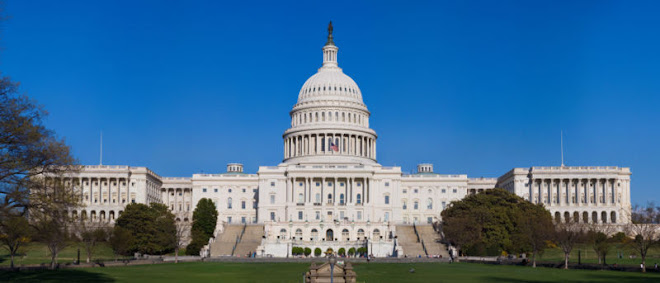
The United States Capitol Building
The Constitutional Convention
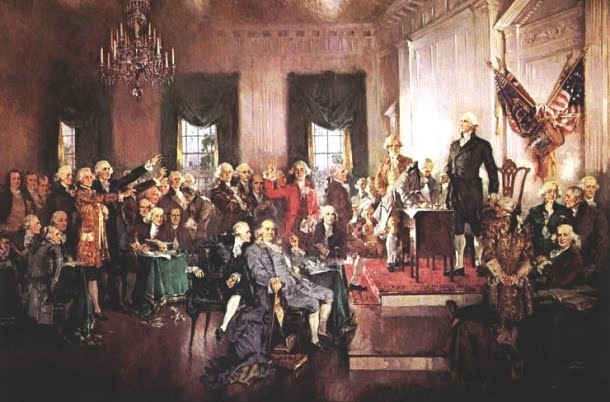
The Continental Congress
George Washington at Valley Forge


No comments:
Post a Comment