
The Rise and Fall of Hope and Change

The Rise and Fall of Hope and Change


Alexis de Toqueville

The American Republic will endure until the day Congress discovers that it can bribe the public with the public's money.
Alexis de Tocqueville

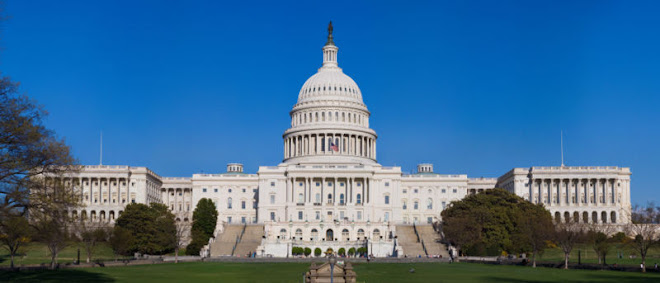
The United States Capitol Building

The United States Capitol Building

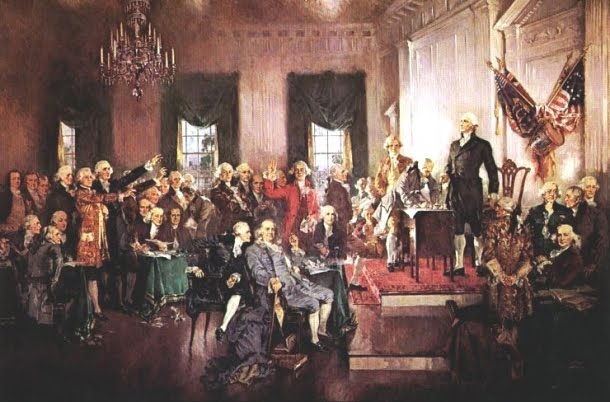
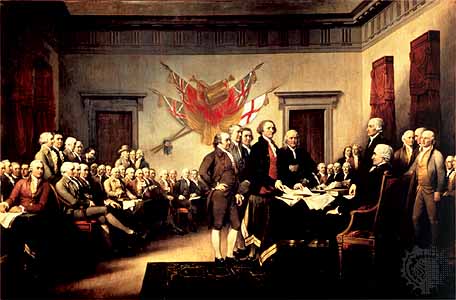
The Constitutional Convention

The Constitutional Convention

The Continental Congress

The Continental Congress

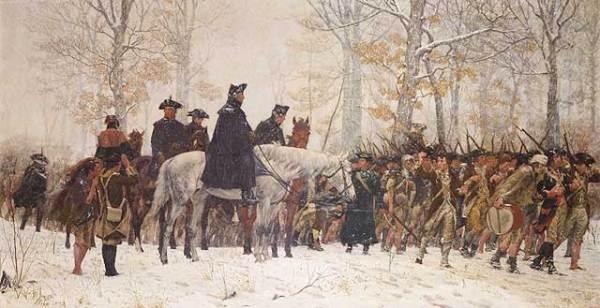
George Washington at Valley Forge

George Washington at Valley Forge


Sunday, February 6, 2011

Obama's Prayer Breakfast Knuckleball

From The American Thinker;

February 07, 2011


Obama's Prayer Breakfast Knuckleball

By Jack Cashill

At the National Prayer Breakfast on February 3, President Obama threw a knuckleball down the middle, and the media whiffed.


Most simply took Obama at his word that as a young man in Chicago, he "came to know Jesus Christ for myself and embrace him as my lord and savior" and that as president, he asks "the Lord" every day to make him "an instrument of his will."


In a moment, I will address the sheer gamesmanship of this theological flutter to the center, but first, a word on the most revealing part of the sermonette. This revelation was missed by everyone in the media except the ever-observant morning radio host at 630 KHOW in Denver, Peter Boyles, who shared it with me.


Said Obama at one point in what seemed like a throwaway line, "My father, who I barely knew -- I only met once for a month in my entire life -- was said to be a non-believer throughout his life." Although he avoided specifics, Obama was referring to the Christmas of 1971, when Barack Obama, Sr. visited the extended Dunham family, including the ten-year-old Barry Obama, in Hawaii.


The president and his writers choose their words carefully for an occasion as public as the Prayer Breakfast. Obama could have safely left the relationship at "barely knew," and no one would have taken notice. Instead, he said he "met" his father, and then only once -- a locution that makes no sense for a boy who had allegedly lived more than two years with the man.


What Boyles believes -- and I think he's right -- is that Team Obama is preparing the media for a shift in the official Obama saga. To this point, the core of the Obama origins story has been that he and parents lived together as a family in Hawaii until Obama was two.


The marriage "might have worked out," Obama's mother tells her son as reported in his 1995 memoir, Dreams from My Father. When, however, Harvard offered Obama Sr. a fellowship to finish his Ph.D., he anguished his way to acceptance. "How can I refuse the best education?" he lamented. "It wasn't your father's fault that he left, you know," Ann tells Obama. "I divorced him."


Obama repeated this fiction as recently as September 2009, when he addressed the nation's schoolchildren. "I get it," he told the kids about childhood struggles. "I know what that's like. My father left my family when I was two years old, and I was raised by a single mother."


In my book, Deconstructing Obama, I coalesce the research done by several independent investigators on the question of Obama's origins, and my conclusions are irrefutable. There never was an Obama family.


Obama's mother left Hawaii for Seattle with little Barry in tow when he was just weeks old. Obama Sr. left Hawaii for Harvard before Barry's first birthday, while Barry and his mother were still in Seattle.


This may not seem like an earthshaking shift, but the official origins story served as the foundation for what biographer David Remnick rightly calls Obama's "signature appeal: the details of his own life as a reflection of a kind of multicultural ideal." As it happens, that ideal was grounded in sand. Obama ascended to the White House on the strength of a story he knew to be untrue.


As early as the summer of 2008, independent researchers had unraveled the oft-told Obama yarn. A single tug on the thread by anyone in the mainstream media -- the respectable conservative media, for that matter -- could have undone the candidacy. Instead, these "responsible" voices did all in their power to shore up the official Obama orthodoxy and scold those who would question it.


At the Prayer Breakfast, Obama shifted the focus from his earthly father to his heavenly one. He did not, however, present his sudden enthusiasm for Jesus Christ as a change of heart, but rather as a sharing of what had been in his heart all along. Unfortunately, nothing he has ever said or written supports this.


In Dreams, Obama talks about first attending Jeremiah Wright's Chicago church in 1988, but he speaks of Jesus only as someone other people embrace. He refers on one occasion to "Will's Jesus." On another occasion, a friend says to him, "We love you, man. Jesus loves you!" But Obama himself has nothing to say about Jesus.


Obama biographer David Mendell, who followed Obama on the 2004 Senate trail in Illinois, wryly observed, "Obama, without fail, would mention his church and his Christian faith when he was campaigning in black churches and more socially conservative downstate Illinois communities."


Yet when Mendell tried to talk to Obama about his faith and his "ever present bible," Obama proved "uncharacteristically short" in his responses. When Mendell persisted, Obama claimed that he was drawn to Christianity because "many of the impulses that I had carried with me and were propelling me forward were the same impulses that express themselves through the church." In other words, Jesus thought pretty much along the same progressive lines as he did.


In his 2006 book, The Audacity of Hope, Obama mentions Jesus only twice, both times with pure calculation. On one occasion, in an attempt to dispel the "liberal caricature," he claims that "just about every member of the Congressional Black Caucus believes Jesus Christ died for his or her sins."


In another, even more cynical moment, Obama exploits Jesus to keep his position on gay marriage flexible. "I must admit," says Obama of his current opposition, "that I may have been infected with society's prejudices and predilections and attributed them to God; that Jesus' call to love one another might demand a different conclusion."


In his review of the Prayer Breakfast speech for Time Magazine, Michal Scherer acknowledges its "political advantages" and rightly observes that Obama is "laying the groundwork by seeking to short circuit conservative critiques."


This is not, however, a criticism. Says Scherer of Obama, "He was sending a signal to the Republican field: He will not allow others to define his own beliefs for him."


For a man capable of fabricating a relationship with his father -- to the point of writing a book about it -- fabricating a relationship with Jesus is no big deal, at least not to Scherer and the mainstream media. They are prepared to believe whatever Obama says and belittle those who don't.


Better still, from the media's perspective and Obama's, no one can ask for documentation about this relationship, at least not in the here and now.

Saturday, February 5, 2011

The CDC Cover-Up Now Turns To Bureaucratic Panic

From Human Events:

The CDC Coverup Now Turns to Bureaucratic Panic


by Erick Erickson


02/04/2011


It’s never the action, it’s the cover up.


Yesterday RedState broke a significant story which points to the Centers for Disease Control and Prevention, the nation’s premier public health organization, making a conscious decision to stop publishing the only federal report on abortion.


To briefly recap, for 40 years the CDC has published the Abortion Surveillance Report. For 40 years that report has appeared in the last November or first December issue of CDC’s journal, the Morbidity and Mortality Report Weekly Report. This year it didn’t. A RedState tradition has been to use this report for our annual retrospective on abortion. When it didn’t appear in November… or December… or in January we decided to ask why.


That inquiry and its response led to our article yesterday.


The internet is an amazing thing. After weeks of checking and phone calls and emails … no report. Then one blog post at RedState later, and suddenly the CDC is falling over themselves to produce something. Funny how that works. Two hours and six minutes after the post went live we had an official response from CDC. The full response is posted below the fold.


According to the CDC we should move along because there is nothing to see here. Really? We’re not so sure.


One thing the government does well is routine. If you have any doubt witness the difference between how the government reacts to an emergency and how it delivers Social Security checks or collects taxes. A low intensity statistical report that has been produced at the same time for the past 40 years would strike most of us as the epitome of routine. “Wait,” says their reply, “it isn’t that simple”. Here is their “explanation”. (Full text of statement below the fold):


My understanding is the population data needed to develop rate/ratio statistics was not available at the time we normally prepare the ASR. It is these data that are often desired by many to track trends and changes in a most precise way possible.


Possible. But is it likely? Another key fact is that the report in question covers abortions conducted in the United States in 2007. So the population data has been extant for at least two years because the Census Bureau - which has done routine real well for, oh, 200 years - had that particular data aggregated on July 1, 2008. That’s pretty “available” by our standards.


But let’s just pretend for a moment the data was somehow not “available” to the CDC. Why? It was available to the Census. Indeed, it was available to anyone with internet access. But somehow the CDC was out of the loop? A more likely and obvious reason the data weren’t available is that a decision had been made to not acquire the data.


Now we’re assured that the 2007 Abortion Surveillance Report is “tentatively” – CDC’s response has this word in bold so we’re assuming the real context is “not going to happen but we’re counting on you guys forgetting about it” – scheduled to be published this month. By “this month” they are saying that it will appear in one of the next three issues of the MMWR.


But wait. The response also says the editorial calendar is booked “well in advance.” Most of us would assume “well in advance” is more than three weeks, especially as the report in question will have to proceed through various levels of clearance from the authors through final approval at the Department of Health and Human Services. So if it isn’t on the calendar… which is implied by the CDC response… and the calendar is locked in well in advance … how do we make the trip from there to here?


The short answer is that now CDC is about to do the other thing bureaucracies do frequently but not well: panic.


After all, the CDC told us last week there were ‘no plans’ to release the data. The CDC now says (at least as of late yesterday) it is scheduled for ‘this month’. Did the CDC just not bother looking at the editorial calendar it now tells us is booked ‘well in advance’?


We have very little doubt what happened it this case. An inconvenient report was quietly killed. The interview we had with the CDC press office confirmed that not only had the report not been written but that there were no plans to do so. This was confirmed by the CDC. The person who confirmed it was not confused. She did not misunderstand. She answered that the report hadn’t been produced, that she didn’t know why, and that she would find out. She then later called back to confirm that it was not an oversight, and that the report would not be forthcoming.


The distance between that response and the current position of it being ready to go to press at seemingly a moment’s notice is difficult to bridge without a skyhook.


The CDC did not run the report. They confirmed that they were not going to run the report. Only after we brought attention to it have they begun scrambling to appear as if they were going to do it all along. At RedState, we’re reminded of the guy who trips on a curb and, embarassed, explains, “totally meant to do that.”


Full text of CDC response:


Our office prepares the Abortion Surveillance Report (ASR). The next report (for calendar year 2007) is tentatively scheduled for release this month, pending no problems with the publishing schedule for CDC’s Morbidity and Mortality Report (MMWR).


The ASR is published annually as a MMWR Surveillance Summary. My understanding is the population data needed to develop rate/ratio statistics was not available at the time we normally prepare the ASR. It is these data that are often desired by many to track trends and changes in a most precise way possible. This created a change in the schedule for MMWR Summary release as the “editorial calendar” is booked well in advance.


Also, please know the ASR is compiled from aggregate data reported by several states and reporting areas. We do take great pains to be sure the data reported is as accurate as possible. Our website presents general information about the ASR – and perhaps might be helpful in the future. www.cdc.gov/reproductivehealth/Data_Stats/Abortion.htm is the “launch page” for information about this topic.


I apologize for any misunderstanding about the report’s release.


This article originally appeared on RedState.com.


--------------------------------------------------------------------------------

Mr. Erickson is the managing editor at RedState.


Warning: Hands Off Medicare And Social Security

From Dick Morris:

WARNING: HANDS OFF MEDICARE AND SOCIAL SECURITY


By DICK MORRIS & EILEEN MCGANN


Published on DickMorris.com on February 5, 2011


Printer-Friendly Version


Republicans are on a roll. Coming off the 2010 victory, they have gotten the Bush tax cuts extended. The courts look likely to strike down Obamacare. Americans increasingly believe that the president's massive spending isn't working and must come down. Even Democrats are lining up to block the EPA's plans to restrict carbon emissions. Obama's foreign policy lies in ruins, his coddling of Islamic fundamentalists, in the words of Rev. Jeremiah Wright, is "coming home to roost."


The one sure way to mess it all up is for the GOP to engage in the political equivalent of imperial over-reach and try to cut (or reform) Medicare or Social Security before the 2012 election. Attempts to cut or even alter one or the other of these programs cost Clinton control of Congress in 1994, Republicans the presidency in 1996, Bush his popularity in 2005, and Obama his Congressional majority in 2010. When will they ever learn?


Some, like Congressman Scott Garrett (R-NJ), Devin Nunes (R-Calif) and Jack Kingston (R-Ga) and the editor of the Weekly Standard Bill Kristol correctly say that you can't balance the budget, in the long term, without touching these two entitlements. But we need to defeat Obama in the short term - 2012 - and attempting to rein in either program is a sure way to lose.


And you don't need to curb either Social Security or Medicare to achieve major deficit reduction. These two programs are not the culprits in the massive recent increase of the federal deficit. Over the past two years, Social Security has risen by 12% and Medicare by 16%. By contrast, nondefense discretionary spending has risen by 41% and welfare entitlements like Medicaid and food stamps are up by 54%.


It is there that we should concentrate our cuts. To curb future deficits, you do need entitlement reform. But to bring down the deficit in the next few years, all you really need to do is roll back these insane spending increases with which Obama has saddled us.


If you take three steps you can cut the deficit to 3-4 percent of GDP (it is now over 10 percent):


1. Rollback nondefense discretionary spending to 2008, pre-Obama levels and hold it there,


2. Block grant Medicaid to the states, roll it back to 2008 levels and build in a three percent retroactive annual increase for medical inflation,


3. Cut troop levels in Iraq and Afghanistan to 60,000 by 2015


Do these three things and you have a deficit below 4 percent of GDP by 2014.


Medicare and Social Security entitlements will drive the deficit - big time - later in the decade when significant numbers of baby boomers reach 65. So reform of these programs is important after the 2012 elections.


Then, the Social Security reforms outlined in Congressman Paul Ryan's (R-Wisc) "roadmap" proposal make sense - a gradual increase in the retirement age of one month every two years and basing cost of living adjustments and benefit levels on price inflation not wage inflation for future retirees.


His concept of means testing Medicare is more problematic. It essentially makes Medicare too much like Medicaid albeit with different income thresholds. The Medical Savings Account approach with a backup of government paid catastrophic insurance makes more sense.


But first things first. We must shelve this debate until we have taken the Senate and defeated Obama. Why add a new gravestone to the cemetery of those who tried to cut these programs and re-elect Obama in the process?


Let's remember that Republicans came to power in the House because of popular animosity against Obamacare. The $500 billion cut in Medicare drove seniors en masse to vote against the Democrats (by a 2:1 margin in 2010). To cut Medicare ourselves, now, would be the height of political insanity.


And what do we lose by waiting two years? Most current entitlement reform plans exempt current retirees and those now over 55 from their reach. If we wait two years, we just exempt those over 57 not those over 55 when we do pass our changes. No big deal.


America will be thrilled if the budget deficit, now $1.5 trillion, drops to about $600 billion by 2014 and if it is on a downward trajectory by 2012. The three steps suggested here will achieve these goals. Don't push it too far.


Avoiding A Jimmy Carter moment

From Town Hall:


Oliver North

Avoiding a Jimmy Carter Moment

Email Oliver North
Columnist's Archive Share Buzz 0diggsdiggTweetSign-Up WASHINGTON -- When Barack Obama went to Cairo in June 2009, he was lauded for seeking "a new beginning between the United States and Muslims around the world." His speech was spiked with apologies for what he believes are past American errors and omissions and peppered with Utopian calls for "peace in the Middle East," a "world in which no nations hold nuclear weapons" and upholding "the richness of religious diversity." The president also boldly proclaimed himself to be "a student of history." But two years on, it appears he has not learned some of history's lessons very well.


Obama must have missed the lesson "What To Say and When" in Presidency 101. Harry Truman missed it, too. In January 1950, with Mao Zedong and the communists triumphant in China, Secretary of State Dean Acheson pointedly omitted the Republic of Korea from the Truman administration's Asian "defensive perimeter." They were listening in Pyongyang and Beijing. Six months later, the Korean People's Army assaulted across the 38th parallel and plunged the world into the Korean War -- at the cost of more than 36,000 American lives.


In October 1956, in the midst of Hungarian protests against Soviet occupation troops, President Dwight Eisenhower erred by allowing his administration to say too much. He raised popular hopes by having his secretary of state, John Foster Dulles, bring the matter before the United Nations Security Council. When the U.S. government's Radio Free Europe broadcast appeals for the Hungarian people to join the resistance and fight for liberation, they did. Soviet dictator Nikita Khrushchev responded with 17 Soviet armored, mechanized and infantry divisions to crush the rebellion. Nearly 3,000 were killed.


Jimmy Carter's presidency was a cascade of national security catastrophes precipitated by saying too much at the wrong time. On New Year's Eve going into 1978, he toasted the Shah of Iran at a state dinner in Tehran as "an island of stability." By August, the president was demanding "immediate, free and fair elections in Iran." On Jan. 16, 1979, the shah fled to Egypt, and two weeks later, Carter's ambassador in Tehran described Ayatollah Ruhollah Khomeini as a "Gandhi-like figure." Days later, after the ayatollah was declared "supreme ruler," a Carter administration spokesman described the "holy man" to be a person of "impeccable integrity." On Nov. 4, Iranian "students," supported by Khomeini's 5-month-old Iranian Revolutionary Guard Corps, sacked the U.S. Embassy and took 56 American citizens hostage. They were held for 444 days. We still are living with the consequences.


Saying too much in the midst of turmoil was also a problem in 1991 after the liberation of Kuwait by a U.S.-led multinational coalition during Operation Desert Storm. In February, on Voice of America broadcasts, President George H.W. Bush urged "the Iraqi military and the Iraqi people to take matters into their own hands, to force Saddam Hussein, the dictator, to step aside." The people of Iraq certainly tried. Within days of the Iraqi army's surrender at Safwan on Feb. 28, Shiite tribes in southern Iraq and then Kurds in the north rose up to take on "the criminal tyrant" in Baghdad. When expected American support never materialized, Saddam dispatched his Republican Guard forces to brutally suppress the uprising, at a death toll believed to be in the tens of thousands.


Those are some of the lessons of history Obama apparently doesn't understand. He was mute for weeks in the summer of 2009 as hundreds of thousands of Iranians protested a fraudulent presidential election that returned Mahmoud Ahmadinejad to power. Last month, evidently unmoved by appeals from then-Prime Minister Saad Hariri, the president was unwilling or unable to condemn a Hezbollah takeover in Lebanon. Three weeks ago, as protesters were ousting Tunisia's Zine El Abidine Ben Ali from two decades in power and rioters took to the streets in Algeria, Egypt, Jordan and Yemen, the O-Team finally began to take notice. But nearly everything Obama and his spokesmen have said seems to fuel the fire.


When Cairo erupted in violence after Friday prayers Jan. 28, a State Department spokesman told reporters that the administration was "reviewing U.S. aid to Egypt." If that was supposed to be a signal of support for the Egyptian military -- an ally in Desert Storm and the most respected government institution in the Land of the Pharaohs -- it didn't work. And neither Obama's silence on the role of the Muslim Brotherhood in the violence nor his televised pleas that "we pray that violence in Egypt will end and the rights and aspirations of the Egyptian people will be realized" have helped.


On Wednesday, White House spokesman Robert Gibbs urged Egyptian President Hosni Mubarak to "begin a government transition." When asked when such a change should occur, he replied, "Now (and) 'now' means 'yesterday.'" Just hours later, Fox News correspondent Greg Palkot and cameraman Olaf Wiig were attacked and severely injured -- and the State Department urged all Americans to get out of Egypt "immediately."


The administration has staked any hope of a positive outcome in this crisis on Mubarak's departure after three decades of rule. That's another lesson from history it may have missed. It was nine months after the shah fled Tehran that our embassy was sacked and the hostages were taken. If Obama wants to avoid his own Jimmy Carter moment, he might be wise to speak less, listen more and act quietly.


Oliver North is the host of "War Stories" on Fox News Channel, the founder and honorary chairman of Freedom Alliance, and the author of "American Heroes." To find out more about Oliver North and read features by other Creators Syndicate writers and cartoonists, visit the Creators Syndicate Web page at www.creators.com.


COPYRIGHT 2011 CREATORS.COM


Oliver North

Oliver North is the host of War Stories on the Fox News Channel, the author of American Heroes in Special Operations, and the founder and honorary chairman of Freedom Alliance.

Republicans Poised To Win Senate

From Dick Morris:


Dick Morris and Eileen McGann

Republicans Poised to Win Senate

Email Dick Morris and Eileen McGann
Columnist's Archive Share Buzz 0diggsdigg

Sign-Up I know we predicted Republican Senate control in 2010. Republicans did gain seven seats and came within four of winning control. Razor thin defeats in Colorado and Washington and unexpected thrashings in Nevada and West Virginia proved us wrong.


But this time -- honest -- we are going to win!


The battlegrounds in 2012 are a lot more red and less blue than in 2010. If we switch seats in North Dakota, Florida, Nebraska, Virginia and Montana -- red states all -- we get control by 52-48.


And the way 2012 is shaping up, Republican control is more and more likely.


Start with retirements. Kent Conrad, the North Dakota liberal twin of retired Byron Dorgan, has announced that he won't run again. That seat is a sure GOP pickup.


Jim Webb, D-Va., has raised very little money, speaks with ambivalence about President Obama's programs and has not yet decided whether to run. George Allen's announced challenge to his re-election should cool him off even further, and he'll probably drop out. Not a sure pickup, but if the Republican Party nominates Allen -- and not some latter-day Christine O'Donnell -- we should be all right.


Herbert Kohl, the Wisconsin Democratic octogenarian, may also not run. He hasn't raised money but did lend his campaign $1 million to fill up his bank account. But loans can be repaid. Kohl may well retire. Defeated Democratic Sen. Russ Feingold may challenge him in a primary, hastening his exit. Not a sure pickup, but in a state that went so heavily Republican in 2010 (the GOP captured the governorship, both houses of the legislature, a Senate seat and more House members), it's a likely Republican gain.


The Nelsons (Bill of Florida and Ben of Nebraska) both face tough challenges from strong candidates in red states. Who knows if they will really run. Ben Nelson has to have the model of Arkansas' Blanche Lincoln firmly in his mind. He needs to quit before he gets thrown out.


Jeff Bingaman, D-N.M., a former client, may not run again, especially since his state lurched sharply to the right in 2010.


And, in Montana, Democrat John Tester, who won by less than 1 point in 2006, is an easy target in a very red state.


So rate North Dakota, Nebraska, Virginia, Montana as very likely Republican victories.


But we won't stop there. Wisconsin -- against either Kohl or Feingold -- is a good pickup prospect. Bob Casey, D-Pa., can be beaten, as can Sherrod Brown, D-Ohio. Bill Nelson, D-Fla., probably won't win again, and Claire McCaskill, D-Mo., will likely lose to former state Treasurer Sarah Steelman. And Republicans have a good shot against Debbie Stabenow, D-Mich.


Joe Manchin, D-W.V., faces mounting scandals, and his failure to make good on his promise to vote like a Republican may cost him his seat. And Bob Menendez, D-N.J., the single sleaziest member of the Senate, may face a challenge in a state whose GOP is animated by its Republican Gov. Chris Christie.


It should be a happy hunting season!


Dick Morris and Eileen McGann

Dick Morris, a former political adviser to Sen. Trent Lott (R-Miss.) and President Bill Clinton, is the author of 2010: Take Back America. To get all of Dick Morris’s and Eileen McGann’s columns for free by email, go to www.dickmorris.com

Friday, February 4, 2011

Obama Tries To Get In Front Of The Parade

From The American Thinker:

February 02, 2011


Obama tries to get in front of the parade

Nancy Morgan

According to media reports, President Obama (almost) resolved the spiraling Egyptian crisis in one "private message" to Hosni Mubarak, AP reports.


President Obama is firmly in charge and appears to finally be calling the shots. In a bold, presidential moment, Obama said Tuesday evening that he has told Mubarak that a transition to representative government "must begin now."


For the millions of Americans who only watch CNN, it appears that our president has, once again, saved the day. Only problem is, it's just not so.


On Monday, after maintaining a conspicuous silence throughout the escalating Egyptian protests, Obama finally revealed America's stance on the escalating Egyptian crisis. A full week after they started. White House Press Secretary Robert Gibbs said it is "not for me or our government to determine" whether Egyptian President Hosni Mubarak should leave office.


Translation: America, via Obama, is firmly committed to sitting on the fence and waiting for the situation to resolve itself. As it appeared to do on Tuesday, with Mubarak announcing the he would not be running for re-election.


With a response time measured in minutes, Obama appeared on national news and claimed the credit. The Washington Post reported:


President Obama, clearly frustrated by Egyptian President Hosni Mubarak's intention to retain his hold on power until elections later this year, said Tuesday evening that he has told Mubarak that a transition to representative government "must begin now."


Taking a cue from George Bush's famous "We hear you now" declaration made on the burning embers of the World Trade Center, Obama proceeded to voice his support for the Egyptian protestors, saying the passion and dignity demonstrated by the people of Egypt has been an inspiration. He says young protesters will reach their destiny. "We hear you now!" Obama stated, using Bush's exact words.


The media ignored the fact that it took a full week for our president to be so inspired, while giving full credence to the "private message" Obama reportedly sent to Mubarak which reportedly persuaded Mubarak to announce he would finally step down. Does anyone else smell a rat?


Like every other issue Obama has faced in the last two years, he maintained a discreet silence until he saw which way the wind was blowing. Then he jumped on board and took the credit. Following events and maintaining silence until there is no political risk is not leadership.


The good news is, Obama has finally taken a stand. The bad news is, he is now committed to those who want Mubarak out now. Unfolding events show this crisis is far from over. With communications now restored, Americans are watching live as this crisis spirals into yet another phase.


Waiting to place a bet until after the race is run is not leadership. And claiming success for a position he never took is shameful. Almost as shameful as trying to obtain courage on the cheap by trying to associate himself with the real leadership George Bush took. "We hear you now" indeed.


Nancy Morgan is a columnist and news editor for conservative news site RightBias.com

She lives in South Carolina

Posted at 10:15 AM

The Washington Post Praises Brave Anti-American Socialist Activist At Cairo Protests

From Gateway Pundit:

Feb 2, 2011 (2 days ago)WaPo Praises Brave Anti-American Socialist Activist at Cairo Protestsfrom Gateway Pundit by Jim HoftFigures. The Washington Post was thrilled to find an anti-American socialist at the Cairo protests to write about.


The Washington Post reported:


From the center of Tahrir Square, Hossam elHamalawy surveyed the sea of people around him.


He could feel it, he said. Victory was close.


“I’ve dreamed of this for a very long time, and it’s finally happening,” the well-known blogger and activist said. He stood completely still in the center of the hundreds of thousands of people who flooded into this downtown square from every direction. “No words can describe it.”


For so many, this fight had started just eight days ago. But Hamalawy, 33, has been fighting against a feared ruler for 13 years.


Hamalawy, a socialist, began his political activism in the late 1990s. No one dared to speak out when the Egyptian regime was brutally cracking down on Islamists, arresting men with long beards and often torturing them in prison, Hamalawy said. Sometimes at small demonstrations, Hamalawy would chant against the iron-fisted rule of President Hosni Mubarak – and behind him people would scatter in fear.


“The people were not courageous enough,” he said, dressed in a pinstripe blazer and jeans. “They were not confident enough to chant against the government, and they would never open their mouth against Mubarak.”


But that didn’t stop him. On Oct. 8, 2000, he was detained after pulling down a U.S. flag from the top of a building at the American University of Cairo, where he was a student.


It was a protest against what he calls the hypocritical policies of the United States, which has supported Mubarak despite his autocratic rule

Hamalawy was stripped naked, his hands were tied behind his back, and he was beaten for days, he said. State security interrogated him and threatened him with rape. After four days, he was released.


The flag was not replaced.


“I’m still proud of that,” he said.


And, the Washington Post is proud of you, too.

You can count on it.