The Rise and Fall of Hope and Change

The Rise and Fall of Hope and Change


Alexis de Toqueville

The American Republic will endure until the day Congress discovers that it can bribe the public with the public's money.
Alexis de Tocqueville

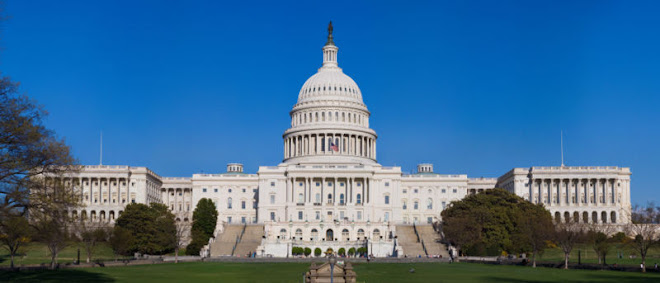
The United States Capitol Building

The United States Capitol Building

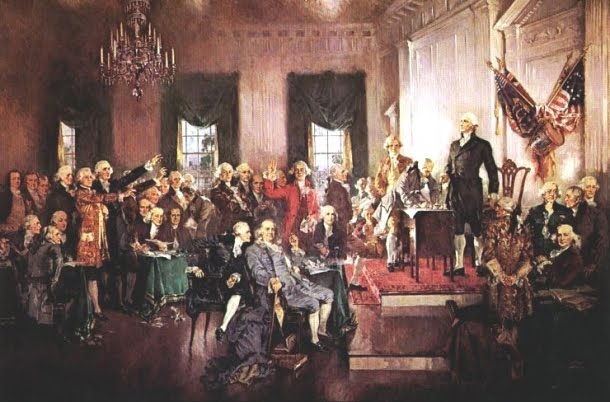
The Constitutional Convention

The Constitutional Convention

The Continental Congress

The Continental Congress

George Washington at Valley Forge

George Washington at Valley Forge


Friday, February 4, 2011

Limbaugh: Why Don't We Send Obama Over To Egypt To Be Their President?

From Rush Limbaugh and Freedom's Lighthouse:

Rush Limbaugh: “Why Don’t We Send Obama over to Egypt to be Their President?” – Audio 2/2/11

Thursday, February 3, 2011

Ten Keys To President Reagan's Effectiveness

From The American Thinker:

February 02, 2011


Ten Keys to President Reagan's Effectiveness

By Janice Shaw Crouse

Former President Ronald Reagan's centennial is just around the corner ­­-- February 6, the date of this year's Super Bowl Sunday. It is appropriate to review some of the reasons for his greatness. Here are ten keys to his effectiveness, in no particular order.


1. Optimism: During his presidency, some grew irritated at his unfailing optimism and his tendency to look on the bright side of life. Now, many of those same people realize that such optimism, even in the midst of crisis and depressing circumstances, is an essential element of leadership.


2. Inspiration and Hope: Reagan had the gift of being able to inspire the nation and give its people hope when all around him were signs that things were not going well. Great leaders are able to transcend the moment to see the future, not in clichés, empty promises or utopian dreams, but in the context of the miracle that is America. Reagan never forgot the promise of this nation, nor the spirit that drives it people.


3. Faith: President Reagan's own faith, though not worn on his sleeve, was obvious, and he understood both the reality of evil's opposition to faith and the good will toward others that faith requires of its adherents.


4. Power: Reagan also understood the necessity for national strength -- power, if you will -- and a strong defense in containing evil dictators and those who want to destroy anything good, including the liberty and freedom of others.


5. Intelligence and Common Sense: Because he was a former actor, his critics dismissed him as a lightweight. However, after his death his family released an astonishing collection of notes in his own handwriting. Those private notes, about his reading and his thoughts regarding whatever was going on at the time, reveal a man who understood history and, perhaps more importantly, understood human nature.


6. Humor and Storytelling: While he took his job seriously, President Reagan did not take himself seriously. In fact, he loved to tell a good joke and found humor even after an attempted assassination almost took his life. He also enjoyed telling stories and could charm even his opponents in social situations.


7. Hands On: Those who worked most closely with the president recount his involvement on a daily basis in decision-making. He brought the heft of the presidency into discussions, as well as his unique ability to get to the heart of a problem and react decisively.


8. Principles: Those who knew him best knew that Ronald Reagan would not "go wobbly." He had a consistent conservative focus, what Margaret Thatcher described as a man who was "not for turning."


9. Charm and Likeability: President Reagan was a charming man who knew how to entertain and genuinely liked other people; he enjoyed being with people, and they knew it. People around him reciprocated the feeling.


10. Courage and Convictions: President Reagan showed his courage and convictions early on in his acting career. He fought the communists for control of the Screen Actors union. During his presidency, he showed the same courage of his convictions as he stood up to his opponents in the State Department, as well as standing strong before the Soviet threats.


President Reagan was a highly effective president, even though he came to the presidency in times that were just as uncertain as today -- unemployment was high, and both inflation and interest rates were soaring into the stratosphere. Yet, under his leadership, the nation faced those problems with positive, consistent policies and decisions. As a result, problems became opportunities -- the striking air traffic controllers were fired, and the aviation industry thrived; unemployment fell here at home, as did the Berlin Wall in Germany. Those Reagan traits were invaluable in those difficult times, and they are desperately needed in these uncertain days of unprecedented debt and deficit crises that threaten the economic stability and even the existence of America.


Janice Shaw Crouse, Ph.D. is director and senior fellow, The Beverly LaHaye Institute, Concerned Women for America.

773 ObamaCare Waivers (650, So Far, To Unions)...And Counting

From The American Thinker:

February 03, 2011


773 Obamacare waivers...and counting

Ethel C. Fenig

In August, 2009, as he was extolling the virtues of his proposed Obamacare, President Barack Obama (D) famously promised "If you like your health care plan, you can keep your health care plan." And if you're a union member you certainly can; if you're not, well...


The Health and Human Services site Helping Americans Keep the Coverage They Have and Promoting Transparency (sic) conveniently lists the 773 waivers approved to date. Scroll through the list; notice that most of the waivers, more than 650 went to unions exempting well over 2 million employees.


And for the millions of other workers who like their health care plan and want to keep their health care plan?

The site also helpfully provides links on how to get one. Go! Lots of luck! You're going to need it.


Posted at 08:13 AM

Obama Regime's EPA Issues Global Warming Rules, Then Issues GE An Exemption

from Gateway Pundit:

Feb 3, 2011 (13 hours ago)Obam issues global warming rules January gives GE exemptionfrom Charging Elephant by divingnews@gmail.com


Washington Examiner


Jefferey Immelt has been CEO of GE since September 2007. He is corrupt, his company knowingly sold good to Iran against federal law following 9-11. He now gets an exemption from Obama for his onerous idiotic rules on global warming? They both would serve their country and their company well by stepping down immediately. That’s my story and I’m sticking to it, I’m J.C.


Last month, the Obama EPA began enforcing new rules regulating the greenhouse gas emissions from any new or expanded power plants.


This week, the EPA issued its first exemption, Environment & Energy News reports:


Maybe GE CEO Jeff Immelt’s closeness to President Obama, and his broad support for Obama’s agenda, had nothing to do with this exemption. But we have no way of knowing that, and given the administration’s record of regularly misleading Americans regarding lobbyists, frankly, I wouldn’t trust the White House if they told me there was no connection.


The Obama administration will spare a stalled power plant project in California from the newest federal limits on greenhouse gases and conventional air pollution, U.S. EPA says in a new court filing that marks a policy shift in the face of industry groups and Republicans accusing the agency of holding up construction of large industrial facilities.


According to a declaration by air chief Gina McCarthy, officials reviewed EPA policies and decided it was appropriate to “grandfather” projects such as the Avenal Power Center, a proposed 600-megawatt power plant in the San Joaquin Valley, so they are exempted from rules such as new air quality standards for smog-forming nitrogen dioxide (NO2).


There’s something interesting about the Avenal Power Center:


The proposed Avenal Energy project will be a combined-cycle generating plant consisting of two natural gas-fired General Electric 7FA Gas Turbines with Heat Recovery Steam Generators (HRSG) and one General Electric Steam Turbine.


On the upside, at least Job Czar Immelt is creating jobs!


Senate Rejects Health Care Law Repeal

From The Hill and ADF:

Senate rejects healthcare repeal


By Julian Pecquet - 02/02/11 06:25 PM ET


The Senate on Wednesday voted down a repeal of President Obama’s healthcare act along party lines, 47-51.


The vote came two weeks to the day the Republican House voted 245-189 to repeal the law, and just days after a federal judge ruled Obama’s signature legislative achievement unconstitutional.


Republicans have vowed to carry the fight forward, saying they will seek to defund the law as it is implemented. The GOP also has promised Wednesday’s repeal vote will not be the last in this Congress.


The vote came on a budgetary point of order, which Republicans needed 60 votes to overcome. Democrats argued repealing healthcare would add an estimated $230 billion to the deficit, according to the Congressional Budget Office. Senate GOP Leader Mitch McConnell (Ky.) called that estimate “preposterous.”


McConnell was trying to add an amendment repealing the healthcare law to legislation reauthorizing the Federal Aviation Administration.


Neither the result nor vote breakdown was a surprise. No Democrats in attendance voted in favor of the measure and no Republicans rejected it. Sens. Mark Warner (D-Va.) and Joe Lieberman (I-Conn.) were absent for the vote.


Just before the vote on the budgetary point of order, the Senate did vote to repeal an unpopular part of the healthcare overhaul that requires businesses to report to the IRS annual purchases of goods and services of more than $600 from each vendor.


The Senate voted 81-17 to eliminate the 1099-reporting requirement, with only Democrats voting against the measure.


Republicans have acknowledged their goal with the vote was to get Democrats on record as defending a law that remains deeply unpopular with large swaths of the public. Twenty-three Senate Democrats are up for reelection in 2012, and many of them face tough races.


"I think the American people understand fully this issue and they know for sure where Democrats and Republicans are," McConnell said after the vote.


Republicans have vowed to pursue their attacks on the law until the next election, when they hope to have enough Senate votes to repeal it. In the meantime, they’ve announced plans to withhold funding for its implementation and have introduced multiple bills to repeal bits and pieces, such as the individual mandate or the Medicare payment board.


On Tuesday, Sens. Lindsey Graham (R-S.C.) and John Barasso (R-Wyo.) introduced legislation that would allow states to opt out of many provisions of the law, including its individual mandate. The goal, Graham acknowledged, is to make reform fail so lawmakers “would have to replace it with something that made more sense.”


Graham vowed to bring up the provision as often as possible.


“If we're going to vote on naming a post office this year, you're going to be voting on this,” Graham said. “We're going to bring this up every time we can.”


The fate of the healthcare law seems likely to be decided by the Supreme Court. Two judges have ruled the bill’s mandate that people have insurance, which would require many consumers to buy insurance, is unconstitutional. Two other judges have ruled it passes constitutional muster.


Sen. Bill Nelson (D-Fla.) on Wednesday called for his colleagues to support a resolution fast-tracking legal challenges to the Supreme Court.


“The vote to repeal healthcare is largely symbolic because the Supreme Court is going to have to be the one to decide this matter,” Nelson said Wednesday. “We ought to do the right thing and ask the high court to rule quickly so we don't keep arguing over this for the next several years.”


The Obama administration, however, has said it would appeal Monday's decision to an appeals court where it feels confident it will prevail.


In contrast to the party-line Senate vote, a handful of Democrats joined unified Republicans in voting to repeal the law in the House last month.


When healthcare was approved by the Senate last year, every Democrat voted in favor in a 60-39 vote. On Wednesday, most Democratic senators were wary of being tarred as flip-floppers, and freshman Sen. Joe Manchin (D-W.Va.), a vocal critic, said he wanted a chance to fix the law before repealing it.


McConnell has previously said Republicans owed voters who returned them to power in the House and increased their numbers in the Senate a vote on healthcare.


This story was updated at 7 p.m.

Wednesday, February 2, 2011

ObamCare Meets Its Death Panel

From Red State:

ObamaCare Meets Its Death Panel


by Erick Erickson


02/01/2011


I am not, with this post, going to attempt a detailed exposition on Judge Vinson’s ruling that declared the individual mandate unconstitutional and, due to the lack of a severability clause, struck the whole law as unconstitutional. But I will give you a brief overview and direct you to other good sources.


Here are the basics you will need to start your day.


First, you need to understand that the case before Judge Vinson was not directed at whether the federal government can involve itself in healthcare. Instead, the case was whether the individual mandate is constitutional.


The individual mandate is the keystone to the whole legislation. Without it, the funding mechanisms of the law collapse in on themselves. Judge Vinson ruled that forcing people to buy healthcare insurance, whether they want it or not, is unconstitutional.


As Judge Vinson put it rather directly,


It is difficult to imagine that a nation which began, at least in part, as the result of opposition to a British mandate giving the East India Company a monopoly and imposing a nominal tax on all tea sold in America would have set out to create a government with the power to force people to buy tea in the first place.


To understand this, you must understand there is a great difference between activity and inactivity. Congress certainly has the right to regulate activity in commerce, but Congress cannot compel you to act. The Obama Adminstration called this argument “novel” and “unprecedented,” but as Kyle Wingfield points out, the judge turned this around on them and got to the core of the activity vs. inactivity debate.


According to the defendants [the Obama administration], because the Supreme Court has never identified a distinction between activity and inactivity as a limitation on Congress’ commerce power, to hold otherwise would “break new legal ground” and be “novel” and “unprecedented.” … First, it is interesting that the defendants — apparently believing the best defense is a good offense — would use the words “novel” and “unprecedented” since, as previously noted, those are the exact same words that the CRS [Congressional Research Service] and CBO [Congressional Budget Office] used to describe the individual mandate before it became law. Furthermore, there is a simple and rather obvious reason why the Supreme Court has never distinguished between activity and inactivity before: it has not been called upon to consider the issue because, until now, Congress had never attempted to exercise its Commerce Clause power in such a way before.


Having ruled the individual mandate unconstitutional, the judge then relied on the Obama Administration and Congress’s own words to declare the whole law unconstitutional.


For a more thorough analysis of the severability issue, John at Powerline has a good write up. Suffice it to say, as Avik Roy notes in Forbes,


In order to overturn Judge Vinson’s ruling upon appeal, it will be necessary for the government to rebut itself: to disprove its own arguments that the individual mandate is essential to PPACA.


Why? Because, according to Judge Vinson, and again from his actual decision at pages 68-70 as quoted by Avik Roy:


Moreover, the defendants have conceded that the Act’s health insurance reforms cannot survive without the individual mandate, which is extremely significant because the various insurance provisions, in turn, are the very heart of the Act itself. The health insurance reform provisions were cited repeatedly during the health care debate, and they were instrumental in passing the Act. In speech after speech President Obama emphasized that the legislative goal was “health insurance reform” and stressed how important it was that Congress fundamentally reform how health insurance companies do business, and “protect every American from the worst practices of the insurance industry.” See, for example, Remarks of President Obama, The State of the Union, delivered Jan. 27, 2009.28 Meanwhile, the Act’s supporters in the Senate and House similarly spoke repeatedly and often of the legislative efforts as being the means to comprehensively reform the health insurance industry…


Congress has also acknowledged in the Act itself that the individual mandate is absolutely “essential” to the Act’s overarching goal of expanding the availability of affordable health insurance coverage and protecting individuals with pre-existing medical conditions: “[I]f there were no [individual mandate], many individuals would wait to purchase health insurance until they needed care . . . The [individual mandate] is essential to creating effective health insurance markets in which improved health insurance products that are guaranteed issue and do not exclude coverage of pre-existing conditions can be sold.” Act § 501(a)(2)(I) (emphasis added).


In other words, the individual mandate is indisputably necessary to the Act’s insurance market reforms, which are, in turn, indisputably necessary to the purpose of the Act. This is obviously a very different situation than in Alaska Airlines, Inc., supra, 480 U.S. at 694 n.18 and 696 (unconstitutional provision severed from rest of statute where the provision was “uncontroversial,” and the debate on the final bill demonstrated its “relative unimportance”), and is more in line with the situation alluded to in New York, supra, 505 U.S. at 187 (suggesting by implication that the entire legislation should be struck when “the purpose of the Act is . . . defeated by the invalidation” of one of its provisions).


The Left’s reaction has been humorous. Powerline notes Ezra Klein’s particular reaction. Klein, you will remember, only a few short weeks ago declared the constitution difficult to understand because it was written more than 100 years ago. He then, being a non-lawyer, did his best to explain Judge Vinson’s decision to readers of the Washington Post and bungled badly.


Bush v. Gore is the best comparison the left can come up with while attacking Judge Roy’s political motivations.


Jen Rubin makes mincemeat out of these arguments by succinctly noting


These are complaints, not legal arguments. And they suggest that the left was totally unprepared for the constitutional attack on their beloved handiwork. After all, the recent mocking by the left of conservatives’ reverence for the Constitution suggests they are mystified that a 200-year old document could get in the way of their historic achievement. They are truly nonplussed, and so they vamp, not with reasoned analysis but with an outpouring of adjectives.


Precisely.


The left had plenty of warning from constitutional scholars and Congress’s own in-house non-partisan researchers that the individual mandate may be unconstitutional. The Democrats chose to ignore all that and proceed. In so doing, they did not just embrace the individual mandate, but they made it the keystone of the legislation — a vital and essentially necessary part of the legislation for it all to work.


In a move that will surely make Mr. Obama bristle, Stephen Dinan at the Washington Times points out, Judge Vinson used Barack Obama’s own words against him.


“I note that in 2008, then-Senator Obama supported a health care reform proposal that did not include an individual mandate because he was at that time strongly opposed to the idea, stating that, ‘If a mandate was the solution, we can try that to solve homelessness by mandating everybody to buy a house,’” Judge Vinson wrote in a footnote toward the end of his 78-page ruling Monday.


A bit of buzz has come up over Judge Vinson refusing to enter an injunction. In fact, some initial statements by several Governors and Attorneys General suggested the states would continue making preparations for Obamacare should the Supreme Court not agree with Judge Vinson. But a close reading of his opinion suggests the 26 states involved in the lawsuit may not have to begin preparations. According to Judge Vinson:


“There is a long-standing presumption ‘that officials of the Executive Branch will adhere to the law as declared by the court. As a result, the declaratory judgment is the functional equivalent of an injunction.’ … There is no reason to conclude that this presumption should not apply here.”


By my reading, Judge Vinson is saying that there need be no injunction because the law is unconstitutional and need not be complied with. That took some testicular fortitude to get to that point.


All the White House and its minion lawyers and leftists can do tonight is call Judge Vinson’s very traditional reading of the constitution “odd and unconventional.”


Judge Vinson’s ruling ultimately tells a group of people used to saying ‘yes we can’ that, in fact, ‘no, you can’t.’ And only in that sense can anyone view this as “odd and unconventional.” A limited federal government is, after all, what the founders had in mind.


--------------------------------------------------------------------------------

Mr. Erickson is the managing editor at RedState.

Obama, Not Egypt, Is The Biggest Threat To U.S. Energy Prices

From The Heritage Foundation:

Morning Bell: Obama, Not Egypt, is Biggest Threat to U.S. Energy Prices


Posted February 2nd, 2011 at 9:09am in Energy and Environment with 54 comments Print This Post

Last Friday on a conference call with reporters about the Obama Administration’s long-term energy proposals, Energy Secretary Steven Chu responded to a question about the situation in Egypt, saying: “Certainly any disruption in the Middle East means a partial disruption in the oil we import. It’s a world market and [a disruption] could actually have real harm of the price. The best way America can protect itself against these incidents is to decrease our dependency on foreign oil, in fact to diversify our supply.” This is a nice sentiment. Unfortunately, everything the Obama Administration is doing is only increasing our dependence on foreign sources of oil.


Secretary Chu is right: Oil does sell on a world market. But transportation and other distribution factors do segment oil markets somewhat. In fact, the United States is currently paying about $10 less for a barrel of oil than European and Asian nations are. Why? Because of U.S. access to oil refined from Canadian oil sands. Access to these vast natural resources is a great diversification of our oil supply. But now the Obama Administration is trying to make it harder for American consumers to get Canadian oil. The Obama Environmental Protection Agency is stonewalling approval for the Keystone pipeline, which would increase the amount of oil the U.S. receives from Canada by over a million barrels per day. And that is not the only oil the Obama Administration is trying to keep out of American consumers’ hands.

Offshore, the Obama Interior Department has blocked access to 19 billion barrels of oil in the Pacific and Atlantic coasts and the eastern Gulf of Mexico—and another 10 billion barrels estimated in the Chukchi Sea off the Alaskan coast. Onshore, federal leasing of oil and gas exploration in the western United States has dropped significantly in the past two years. According to data compiled by the Western Energy Alliance, the Bureau of Land Management offered 79 percent fewer leases for oil and natural gas development in Colorado, Montana, New Mexico, North Dakota, Utah, and Wyoming in 2010 than in 2005. And then there is the Arctic National Wildlife Reserve, where an estimated 10 billion barrels of oil lie beneath a few thousand acres that can be accessed with minimal environmental impact.


Allowing Americans to develop these resources could easily produce at least 1 million new barrels of oil a day. The Heritage Foundation’s Center for Data Analysis estimates that, if the United States managed to increase its domestic oil production by 1 million barrels a day, it would create an additional 128,000 jobs and generate $7.7 billion in economic activity.


As bad as these existing energy policies are, President Obama’s planned energy policies are even worse. Today, the President is meeting with Senate Energy and Natural Resources Chairman Jeff Bingaman (D–NM) to plot passage of a clean energy standard (CES) bill. CES is just another cap-and-trade, energy-tax-like policy, except it’s all cap and no trade. A CES would mandate that all electricity providers generate a certain percentage of energy from carbon-free sources. Just like cap and trade, this policy is fundamentally just an energy tax that would drive up everyone’s electricity prices. Ironically, this would make electric vehicles even more expensive to operate, but we’re sure the Obama Administration would offer another round of taxpayer-funded subsidies to fix that problem.


Government policies that ban economically feasible energy development while subsidizing economically unsustainable ones only raise energy costs rather than lowering them. What the U.S. economy really needs is a truly free-market energy approach, one that includes (1) real nuclear energy reform, not more loan guarantees; (2) predictable and sensible coal regulations; (3) reduced regulation on renewable energy; (4) an end to all energy subsidies; and (5) common-sense limits to environmental litigation.


Congress should not let unrest in the Middle East scare them into energy policies that would make all our energy only more expensive. More bans on energy development, more subsidies for economically unproven technologies, and expensive new alternative energy production mandates are not the answer. America needs a true free-market approach to energy, and we need it now.


Quick Hits:


•Senate Republicans will push ahead with a vote to repeal Obamacare today.

•According to Gallup, for the fourth consecutive month, job creation was essentially flat.

•Governor Susana Martinez (R–NM) declared this week that New Mexico is no longer a sanctuary state.

•A spokeswoman for Aetna confirmed Monday that, thanks to Obamacare, the insurer will stop selling new individual health policies and will cancel existing ones in 2012 in Colorado.

•After yesterday’s ruling finding the law void, Wisconsin Attorney General J. B. Van Hollen has declared the Badger State free of any obligations imposed by Obamacare